

 Ahonui Stanford Damar August 1, 2026 12:44 pm . 4 min read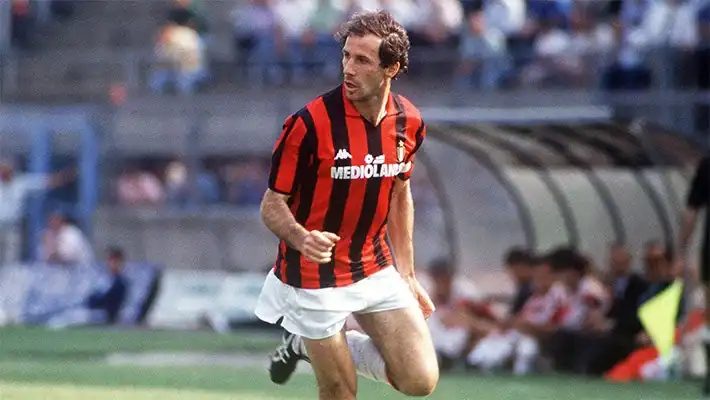
FolioPitch.com – 01 August 2026 | The world of football lost a true icon yesterday, and the resonance of that loss is felt deeply across generations. The legendary Franco Baresi passed away at the age of 66, leaving behind a legacy that transcends trophies and titles. Today, the Gazzetta dello Sport dedicates its pages to the Milan legend, highlighting that GdS Character determination and quality Baresi s journey is a huge inspiration. Indeed, his life was a masterclass in overcoming adversity, a story that continues to motivate players and fans alike.
Baresi’s journey began in Travagliato, a small town near Brescia, where his exceptional talent was evident from a young age. Despite being rejected by Inter, he found his home at AC Milan in 1974, a family he would never truly leave. His brother Beppe went to Inter, but Franco’s path led to the Rossoneri, thanks to the keen eye of Italo Galbiati. With his youthful appearance and elegant technique, opponents often underestimated him—until his first decisive tackle proved otherwise. The nickname ‘Piscinin’ (little one) became a symbol of his immense presence on the pitch.
His Serie A debut arrived in April 1978 under Nils Liedholm, and quickly Baresi proved he was more than just a lucky charm. By the following season, he was a key player, and his leadership qualities were undeniable. Even the great Gianni Rivera noticed the young defender’s extraordinary character. During a tournament match against Flamengo, Baresi daringly called out to Rivera: ‘So, can you pass me?’ Rather than being offended, Rivera applauded his courage, recognizing the genesis of a leader. By age 22, Baresi was wearing the captain’s armband, a role he would redefine for decades.
Life was not a straight line to glory. Baresi faced severe setbacks, including two relegations with Milan due to scandals and financial turmoil. Yet, his response was always the same: determination and quality. He fought through a serious virus that sidelined him for months, and he even went to the 1982 World Cup without playing a minute, yet came home with a winner’s medal. Despite temptations from other clubs, his loyalty to Milan never wavered.
The turning point arrived with Silvio Berlusconi’s presidency and Arrigo Sacchi’s revolutionary coaching. Baresi became the cornerstone of a team that dominated Italy and Europe. With stars like Gullit, Van Basten, and Rijkaard, Milan conquered the European Cup in 1989 and 1990, and Baresi lifted trophy after trophy with quiet composure. As one teammate noted, he didn’t need to shout—his presence alone commanded respect. This period, chronicled in the latest Gazzetta dello Sport feature, underscores why GdS Character determination and quality Baresi s journey is a huge inspiration for anyone facing challenges.
When Sacchi left, many thought Baresi’s era was over. Fabio Capello, however, used that doubt to ignite a new fire. The result was four more Serie A titles and the 1994 European Cup. Baresi also made a comeback for the national team after retiring in 1992, leading Italy to the 1994 World Cup final. His tears after missing a penalty in that final touched the hearts of millions, showing that even the strongest heroes can feel pain.
After retiring in 1997, Milan retired his No. 6 shirt forever. Baresi took on various roles, including a brief spell at Fulham, but his bond with Milan remained unbreakable. He became a symbol of loyalty, resilience, and pure class. His passing is a moment of mourning, but his story lives on.
In the end, what made Baresi special was not just his skill, but his unyielding spirit. He faced every obstacle with head held high, never complaining, always fighting. As the Gazzetta dello Sport beautifully puts it, the theme of GdS Character determination and quality Baresi s journey is a huge inspiration that will echo through football history. His legacy is a reminder that true greatness is measured not by the absence of failure, but by the courage to rise after every fall.
Franco Baresi may have left us, but the Piscinin’s spirit will guide future generations forever. All rise for the eternal captain.
Ahonui Stanford Damar somehow turned a literature degree into a career writing news—maybe because fiction and breaking news both require a healthy dose of imagination. Based in Tangerang since 2011, he balances his journalistic cyn



This website uses cookies to ensure you get the best experience on our website and to comply with privacy regulations (GDPR). By continuing, you agree to our Privacy Policy and Cookie Policy.