

 Ahonui Stanford Damar August 2, 2026 3:42 pm . 5 min read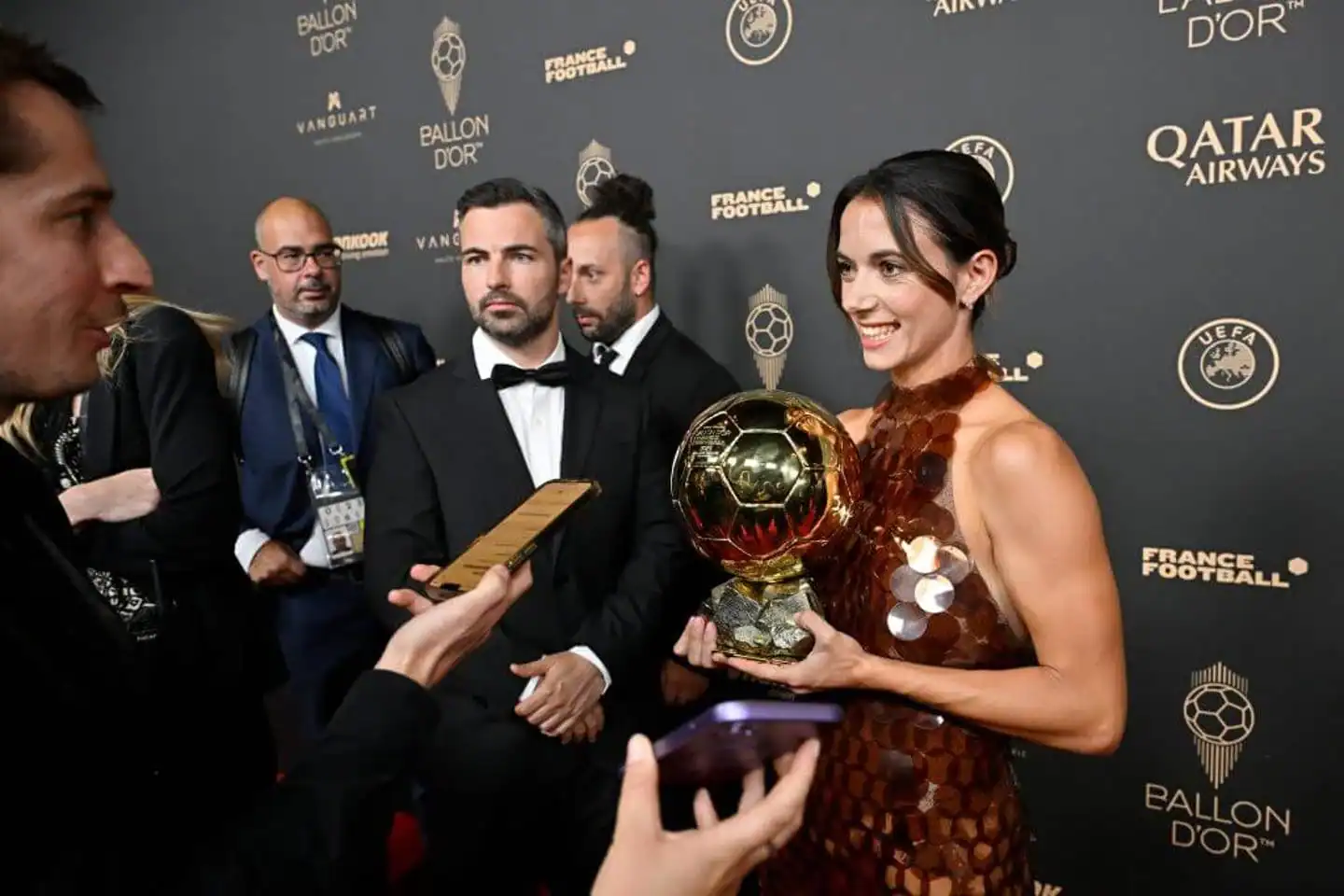
FolioPitch.com – 02 August 2026 | The football world is still mourning the loss of Franco Baresi, the legendary AC Milan captain who passed away at the age of 66. As tributes pour in from every corner of the globe, one of his former teammates, Dejan Savicevic, has stirred the debate anew with a pointed question: “Savicevic: How did Baresi not win the Ballon d’Or? Journalists’ fault!” The Montenegrin playmaker, who shared the San Siro dressing room with Baresi during Milan’s golden era, did not mince words when reflecting on the injustice of the iconic defender never receiving football’s most prestigious individual honor.
In an in-depth interview with La Gazzetta dello Sport, published on Sunday, Savicevic spoke fondly of his former captain, who will be honored at a funeral service in Milan on Tuesday. “He was a great person, a great man. He was a great teammate and a wonderful player. He had football running through him, he understood everything and had an incredible vision of the game,” Savicevic recalled. The 58-year-old also remembered the famous San Siro chants: “One capitano, there’s only one capitano. It was wonderful to listen to those chants, they gave us goosebumps, it gave everyone a boost.”
Baresi, widely regarded as one of the greatest defenders in the history of the sport, spent his entire career at AC Milan, winning six Serie A titles, three European Cups, and two Intercontinental Cups. His reading of the game, his elegant yet uncompromising defending, and his leadership on the pitch earned him comparisons to Franz Beckenbauer, the only other defender widely seen as his equal. However, unlike Beckenbauer, who won the Ballon d’Or twice, Baresi never claimed the trophy. For Savicevic, this remains an inexplicable oversight.
“That’s one of them,” Savicevic said when asked about Baresi being among the greatest players never to have won the Ballon d’Or. “Come on, that’s a shame. How could you not give the Ballon d’Or to Baresi? But that’s your fault,” he teased the journalist before clarifying: “You journalists. You didn’t vote for him, only the Dutch players (from Milan) won. Rijkaard always finished in front of him in first place.” The reference was to Frank Rijkaard, who finished third in the 1988 Ballon d’Or voting and second in 1989, while Marco van Basten and Ruud Gullit also claimed the award during Milan’s imperious run. Savicevic added, “Now, with all due respect to Rijkaard, we’re talking about a midfielder with good passing, a good footballer, but Baresi was something else. He was a phenomenon. Don’t talk to me about the Ballon d’Or, that irks me.”
The debate over Baresi’s lack of a Ballon d’Or has resurfaced many times over the years. Only three defenders have ever won the award: Beckenbauer, Matthias Sammer, and Fabio Cannavaro. Savicevic insists none of them, great as they were, could match Baresi’s all-around brilliance. “I’m not saying it’s a shame, but they weren’t like Baresi. He had another great quality in him as well: He didn’t take anything too seriously. He’d say ‘okay, come on, let’s forget it. Think positively’. He was a leader, he passed that on to everyone,” he said.
Savicevic also shared personal memories of his early days at Milan, when he struggled to adapt and considered leaving. “I had a bit of a crisis in the early days. I wasn’t playing, I was homesick. Franco gave me a hug and consoled me by saying ‘come on Dean, be patient, there are a lot of us here, we’re all good’. I wanted to leave and he told me: ‘But where do you want to go? We’re here at Milan, where could you feel any better? Don’t get angry, don’t give up’.” That support, said Savicevic, defined Baresi’s character as much as his on-field heroics.
The question of “Savicevic: How did Baresi not win the Ballon d’Or? Journalists’ fault” is not merely a personal grievance. It highlights how the award, historically biased toward attacking players, often overlooked the contributions of defenders. Baresi’s extraordinary career, which also included a World Cup win with Italy in 1982 and a runner-up finish in 1994, should have placed him in the pantheon of Ballon d’Or winners. Yet, year after year, the voters—journalists from across Europe—chose forwards and midfielders, leaving Baresi’s brilliance perpetually unacknowledged in the individual award’s history.
As the football world bids farewell to Franco Baresi, Savicevic’s words serve as a powerful reminder of the man’s greatness. The funeral in Milan will bring together legends from multiple generations, all of whom will remember the captain who defined an era. But for Savicevic, the absence of a Ballon d’Or in Baresi’s trophy cabinet remains an unforgivable oversight—one that he squarely lays at the feet of the football journalists who failed to recognize the obvious. “Savicevic: How did Baresi not win the Ballon d’Or? Journalists’ fault!” he repeated, and this time, it sounded less like a question and more like a verdict.
In the end, Baresi’s legacy is not diminished by the lack of a Ballon d’Or. For Milan fans and football purists, he will always be one of the greatest to ever play the game. But as Savicevic so passionately argued, the award’s credibility will forever be questioned when a player like Franco Baresi, who had football running through his veins, was never granted the ultimate individual honor. His memory endures, not just in the silverware he won, but in the hearts of all who witnessed his genius. And for many, the question will linger: how on earth did they not give him the Ballon d’Or?
Ahonui Stanford Damar somehow turned a literature degree into a career writing news—maybe because fiction and breaking news both require a healthy dose of imagination. Based in Tangerang since 2011, he balances his journalistic cyn


This website uses cookies to ensure you get the best experience on our website and to comply with privacy regulations (GDPR). By continuing, you agree to our Privacy Policy and Cookie Policy.