


 Eathelyn Loutitia Eufemia June 30, 2026 10:27 pm . 4 min read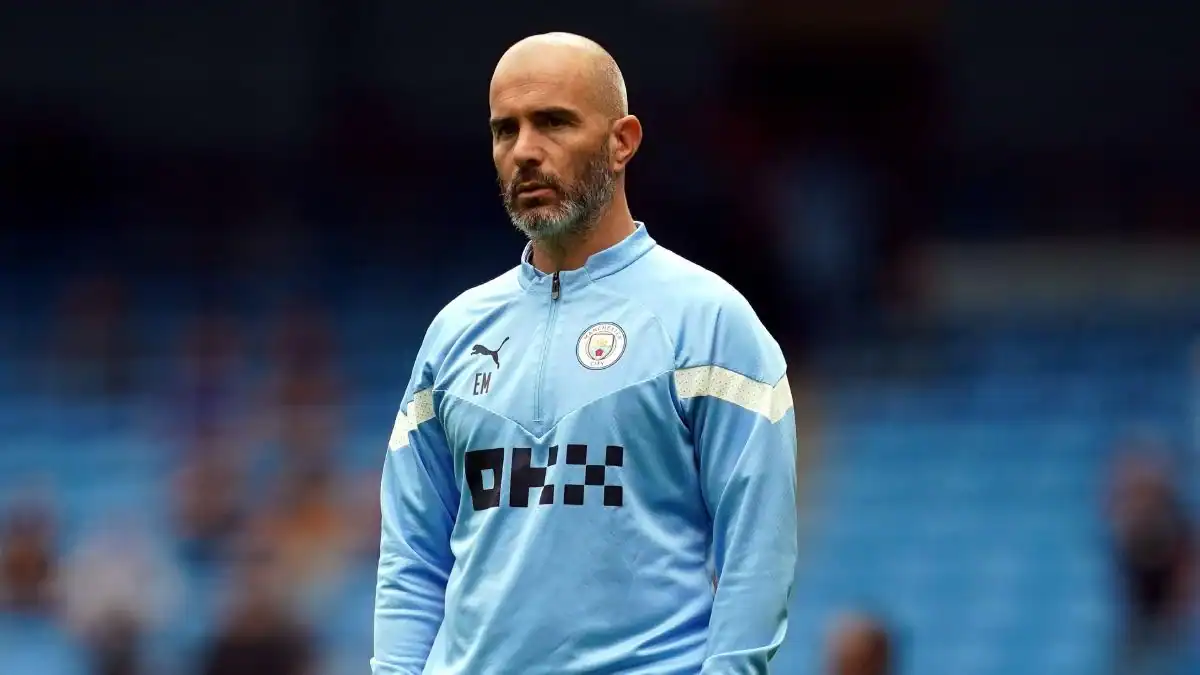
FolioPitch.com – 30 June 2026 | In a move that has stirred both national pride and lingering regret, the appointment of Enzo Maresca as Manchester City‘s head coach has reignited debates about Italian football’s relationship with its own talent. Newspaper claims Maresca a source of pride and regret for Italy, as Gazzetta dello Sport analyses the journey of the former Chelsea boss from Premier League success to the Etihad hot seat.
Maresca, a former Juventus midfielder, was officially confirmed as Pep Guardiola’s successor on Monday, ending a decade-long era at City. La Gazzetta dello Sport’s Filippo Maria Ricci, in a column dissecting the move, highlighted the dual emotions: pride that an Italian coach was chosen to lead a top-tier club like Manchester City, and regret over the complex circumstances that led him from Chelsea to Manchester just months after his appointment at Stamford Bridge.
Newspaper claims Maresca a source of pride and regret for Italy in the sense that his success abroad contrasts sharply with his struggles at home. Maresca never coached in Serie A; his only experience in Italian football ended in disaster when he was sacked by Parma after just 13 games in the 2021-22 season. Yet, his achievements at Leicester City (Premier League promotion in 2024) and Chelsea (Conference League and Club World Cup titles in 2025) showcase a tactical acumen that Italian football failed to harness.
The circumstances of Maresca’s move to City are equally telling. According to Ricci, City approached Guardiola towards the end of 2025, when Maresca was still under contract with Chelsea. In December, Maresca was informed he was being considered as Guardiola’s successor. He immediately informed Chelsea, and on New Year’s Day 2026, he resigned. The relationship between the clubs soured, leading to a costly and contentious negotiation.
This episode underscores a recurring theme: Italy’s inability to retain its coaching talent. Newspaper claims Maresca a source of pride and regret for Italy because while his appointment enhances the country’s reputation abroad, it also highlights the systemic issues that have driven him away. Ricci notes that Maresca excelled despite Chelsea’s turmoil—an oversized squad, internal conflicts, and burdensome contracts. ‘It is hard not to smile when reflecting on his two unsuccessful experiences in Italy: Italian football really is a unique environment,’ he wrote.
The pride comes from seeing an Italian coach trusted with one of football’s most ambitious projects. Maresca will inherit a squad built by Guardiola, but his tactical flexibility and man-management skills—honed at Leicester and Chelsea—suggest he is ready. Yet, the regret lingers: Italian clubs rarely nurture such talent. The last Italian to manage a top Premier League side was Carlo Ancelotti, and before him, Roberto Di Matteo. Maresca’s career path—from Parma’s failure to Leicester’s promotion and Chelsea’s trophies—illustrates a pattern of Italian coaches thriving only after leaving home.
As Maresca prepares to take over at City, Italian football fans are left with mixed feelings. Newspaper claims Maresca a source of pride and regret for Italy—pride in his achievement, regret that he was not given the same chance in Serie A. The Gazzetta column serves as a poignant reminder of the calcio’s complex relationship with its own talent.
In a broader context, Maresca’s journey reflects the globalization of football. Italian coaches are increasingly sought after abroad, but the domestic league must ask itself why it failed to recognize Maresca’s potential. His story is both a celebration and a cautionary tale. For now, Italy can take solace in knowing that one of its own will guide Manchester City into a new era. But the question remains: will Italian football ever learn to keep its brightest minds?
In conclusion, Enzo Maresca’s ascent to the Manchester City helm is a landmark moment for Italian football. It showcases the potential of its coaches on the world stage while exposing the flaws of a system that often undervalues them. The Gazzetta analysis captures this duality perfectly, offering a nuanced perspective that resonates far beyond the pitch.
You know that friend who can tell you the best spot for sambal while also dissecting the latest smartphone specs? That’s Eathelyn Loutitia Eufemia—a Jakarta creative who’s been weaving stories and campaigns since 2012, with one eye on the gadget world and the other on a bowl of soto. She’ll happily chat about design trends over lunch, then pull out her phone to show you the best street food map she’s curated herself.



This website uses cookies to ensure you get the best experience on our website and to comply with privacy regulations (GDPR). By continuing, you agree to our Privacy Policy and Cookie Policy.