


 Demas Zac October 9, 2026 10:37 pm . 5 min read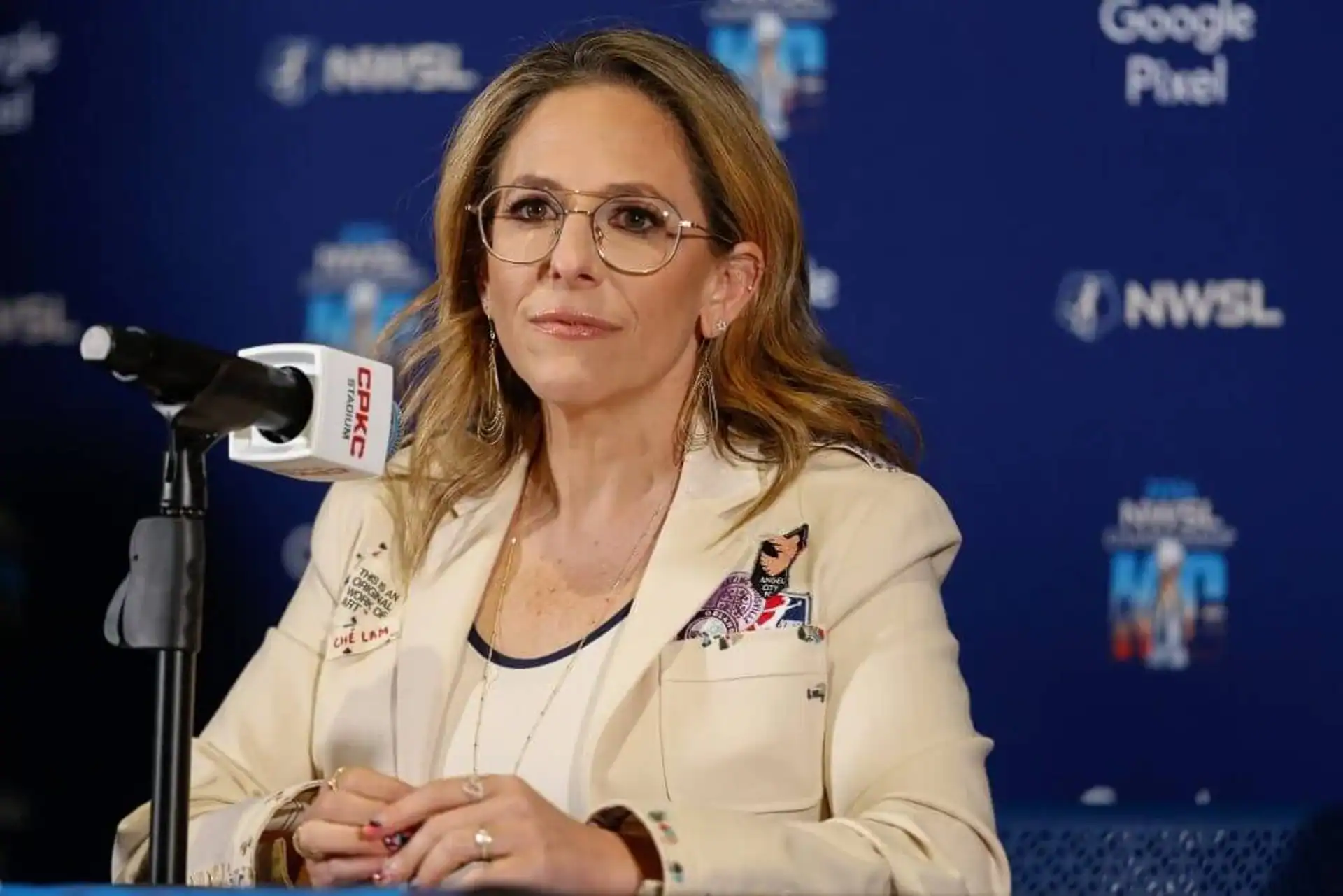
FolioPitch.com – 09 October 2026 | Jessica Berman, commissioner of the National Women’s Soccer League, has made it clear that the league’s growth is far from finished. Speaking at the Leaders Week Conference in London, Berman revealed that Berman looking to expand NWSL to 20 teams is not just a distant ambition but an active plan already in motion. The NWSL currently fields 16 teams, with expansion to 18 clubs already scheduled for 2028. However, Berman wants to push beyond that, opening the door to 20 teams and potentially more.
“We’re about to open our data room for teams 19 and 20 because we intend to keep expanding,” Berman said at the conference. “We’ve decided, given the scale of the league at this point, that we’ll make decisions when we feel like the market is ready to come in. We want to get through the season, update all that financial information and put our best foot forward because there’s a lot of great stories to tell from a business and financial perspective.”
Berman, who became commissioner in April 2022, has overseen a period of remarkable growth. When she took charge, the NWSL had just 12 teams. That number quickly rose to 16, and by 2028 it will reach 18. The league has already welcomed several new clubs during her tenure, including the Utah Royals and Bay FC in 2024, as well as Boston Legacy and Denver Summit FC, both set to join in 2026. Atlanta City FC and a yet-to-be-named team in Columbus, Ohio, will enter in 2028. Yet even with those additions, Berman looking to expand NWSL to 20 teams signals that the league’s leadership sees no reason to stop there.
The financial trajectory of expansion has been staggering. In 2020, Angel City FC paid an expansion fee of $2 million. By the time Boston Legacy was announced, the fee had skyrocketed to $53 million. Denver Summit then broke that record with a $110 million fee, followed by Atlanta City FC at $165 million, and finally the Columbus team at a record $205 million. These figures underscore the immense confidence investors have in the NWSL’s future. Berman believes that continued expansion is essential to build on that momentum.
“In order for us to really amalgamate audience and build on the foundation we’ve created in the last few years, we really need to scale our presence across communities in all of America,” Berman said. She pointed to the size of the major men’s professional leagues in the United States, noting that the NFL and NHL each have 32 teams, while the NBA, MLB, and MLS all operate with 30 teams. “The Big Five are 30-plus teams, so there’s nothing that should stand in the way of the NWSL being that size,” she added. “It’s not going to happen tomorrow, but it is our vision to be able to compete on a national basis.”
While no specific cities have been confirmed for teams 19 and 20, past interest has been reported from markets such as Cincinnati and Cleveland. The league’s approach appears to be deliberate: rather than rushing to add clubs, Berman wants to ensure that any new market is fully prepared and financially viable. The decision to open a data room for prospective owners is a key step in that process, allowing the league to evaluate bids and financial projections before making final choices.
The push for further expansion comes at a time when women’s soccer in the United States is experiencing unprecedented popularity. Record attendance, rising television viewership, and increased sponsorship revenue have all contributed to a healthier business environment. Adding more teams would not only increase the league’s footprint but also create more opportunities for players, coaches, and staff. It would also intensify competition and potentially raise the overall level of play.
However, expansion is not without challenges. Adding teams dilutes the existing talent pool, and the league must ensure that new clubs have adequate infrastructure, including stadiums and training facilities. The NWSL has faced criticism in the past for uneven resource distribution, and Berman’s cautious approach—waiting for the right markets rather than expanding for its own sake—reflects an awareness of those pitfalls.
Still, the commissioner’s vision is clear. Berman looking to expand NWSL to 20 teams is a statement of intent that aligns with her broader goal of making the NWSL one of the premier sports leagues in the country. By targeting 20 teams and beyond, she is signaling that the league is ready to compete not just on the pitch but in the broader American sports landscape.
As the NWSL prepares for its next season and continues to update its financial data, the coming months will be crucial. The opening of the data room for teams 19 and 20 will likely attract interest from multiple ownership groups. If the league can maintain its current trajectory, it may not be long before the NWSL reaches 20 teams—and perhaps even more. For now, Berman’s message is unmistakable: the NWSL is expanding, and it has no plans to slow down.
In conclusion, Jessica Berman’s ambition to grow the NWSL to 20 teams reflects a broader confidence in the league’s economic and cultural potential. With expansion fees soaring and new markets eager to join, the NWSL is positioning itself alongside the biggest sports leagues in the United States. While challenges remain, the commissioner’s strategic patience and clear vision suggest that the league’s upward trajectory is sustainable. The road to 20 teams may be gradual, but it is undeniably underway.
From the restless hum of Medan’s newsrooms, Demas Zac forged a writer’s instinct—sharpened by conversations with journalists who treated truth like poetry. Since 2017, he has turned the lens inward, observing how sci-fi dystopias mirror the rhythm of urban streets, finding sparks of hope in concrete corners. His words don’t just narrate; they dare you to see the future hiding in today’s quiet revolutions.





This website uses cookies to ensure you get the best experience on our website and to comply with privacy regulations (GDPR). By continuing, you agree to our Privacy Policy and Cookie Policy.