

 Ahonui Stanford Damar August 1, 2026 11:52 am . 5 min read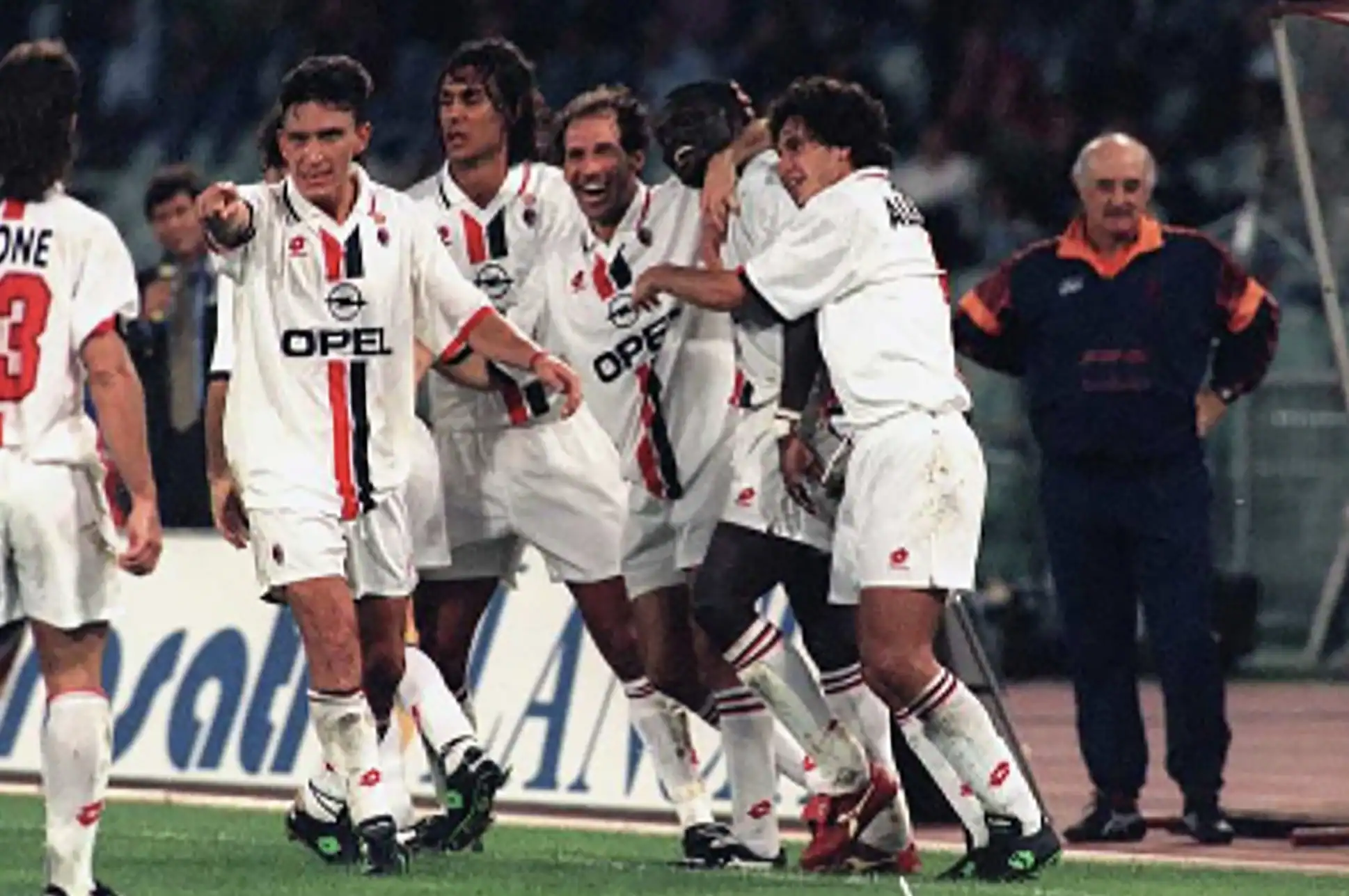
FolioPitch.com – 01 August 2026 | In the pantheon of AC Milan legends, the connection between Gianni Rivera and Franco Baresi stands as a testament to the club’s enduring spirit. Rivera remembers Baresi their friendship and his rise It was clear right away that the young defender was not just another promising player, but a future symbol of the Rossoneri. In a candid interview with La Gazzetta dello Sport, Rivera opened up about their bond, the challenges they faced, and the unique qualities that made Baresi one of the greatest defenders in football history.
The relationship between the two began in the late 1970s, when Baresi, then a slender teenager, joined the Milan youth ranks. Rivera, already a seasoned star and captain, was quick to notice something special. “Baresi used to address me formally,” Rivera recalled. “So I said: ‘Look, I’m your teammate, not your boss. I’m just your captain.'” That initial humility and respect defined Baresi’s character, and Rivera, who was not known for easily praising young players, was impressed. “It was clear right away,” he emphasized, “that he was a real talent and that he would go a long way.”
Baresi’s nickname, “Piscinin,” which means “little one” in the Milanese dialect, was born out of a peculiar circumstance. Inter, the city rivals, had rejected him because they thought he was too small and too young. Rivera laughed at the memory: “Oh, really? Luckily, Italo Galbiati brought him to Milan.” It was the club’s masseur, Paolo Mariconti, who affectionately called him Piscinin, becoming a kind of second father to the young Franco. This warmth and care within the Milan family allowed Baresi to flourish.
The debut came in a match in Verona, and Rivera vividly remembers the moment. “I was playing, I was 34. Liedholm gave him his debut. Turone was suspended and Liedholm took him aside and simply said: ‘Now you play.’ And he played very well, without problems, confident, head held high.” Rivera, who himself had debuted as a prodigy, understood the pressure Baresi felt. “He was definitely excited,” Rivera said. “The first time is beautiful and incredible, but also a little difficult. These are special moments.”
Despite his youth, Baresi showed remarkable composure. Even then, a young goalkeeper, Albertosi, expressed doubts, often telling Baresi to be careful. “Franco was a serious and polite guy,” Rivera noted. “And above all, kind and respectful.” Rivera also recognized Baresi’s tactical brilliance. “Franco was destined for the job,” he said. “What he did on the pitch was simple. He had the right pace, the speed, and the determination. I said he would become the libero of the future.” Those words proved prophetic, as Baresi went on to redefine the role for a generation.
The first major triumph together came in 1979, when Milan clinched their tenth Scudetto, the star-studded title. Rivera was at the twilight of his career, while Baresi was just beginning. “Yes, the tenth, a very beautiful story,” Rivera recalled. “Franco was at the beginning of his Milan career. I was at the end of mine. An important and also difficult Scudetto.” The team battled Ilario Castagner’s Perugia, who had gone unbeaten, but Milan’s determination prevailed. Rivera proposed a special bonus for Baresi, who had earned just 12 million lire that season. “He had gotten his driving license and bought a car,” Rivera said. “A grey Golf, 9 million.” The small details highlighted the simplicity of a different era.
Rivera later led Milan to European Cup glory in Madrid, while Baresi would repeat that feat as captain in Barcelona 20 years later. Rivera was present at Camp Nou for that emotional night. “I was at Camp Nou and I felt so much emotion. Great AC Milan. Great Baresi.” The admiration was mutual. When asked if Baresi’s failure to win the Ballon d’Or was an injustice, Rivera was unequivocal. “I think so,” he said. “I don’t know the criteria back then, but he was the greatest defender ever in Italy.”
Franco Baresi embodied everything AC Milan stands for. He remained loyal through relegation, rejection, and adversity, becoming the captain and the symbol of a reborn club. Rivera reflects on how Baresi could have left but never did. “He went to Serie B, became the captain and the symbol.” His legacy, the eternal number 6, is a testament to his dedication. Rivera hopes such players can emerge again. “I hope that in the future, players and men like him can emerge, with his character, his determination, his affection for the club, for the shirt. In this respect, our great Piscinin was unique.”
Gianni Rivera’s memories serve as a poignant reminder of the beauty of football, where friendship and respect transcend generations. Rivera remembers Baresi their friendship and his rise It was clear right away, but even the legendary captain could not have predicted just how deeply Baresi would etch his name into AC Milan’s history. Their story is not merely about trophies, but about the unbreakable bond between a mentor and a pupil who became an equal. As Milan continues to evolve, the legacy of Rivera and Baresi remains a guiding light, proving that loyalty, talent, and humility can create greatness that lasts forever.
Ahonui Stanford Damar somehow turned a literature degree into a career writing news—maybe because fiction and breaking news both require a healthy dose of imagination. Based in Tangerang since 2011, he balances his journalistic cyn


This website uses cookies to ensure you get the best experience on our website and to comply with privacy regulations (GDPR). By continuing, you agree to our Privacy Policy and Cookie Policy.